

Kullu also called “Kulanthapitha,” has always been a popular spot for travelers who want to enjoy its mystical charm and simple, traditional way of life. Kullu Dussehra, an international fair takes place in the Kullu district. It stands out because while Dussehra festivities conclude across the country, they just begin in Kullu. Kullu Dussehra 2025 will be celebrated on 2nd of October. Kullu Dussehra involves all the Gods and Goddesses of Kullu Valley. The town adorns itself with ornate chariots, resembling a magnificent Dussehra scene.
In this article, we will tell you more about historical Kullu Dussehra.
Kullu Dussehra
Kullu Dussehra festival stands as the grandest and most renowned celebration in Himachal Pradesh. In Kullu, Dussehra is affectionately known as Dashami. This festival holds a cherished place in the hearts of the people from the Kullu Valley. The reasons behind its celebration and its origin are revealed as you proceed through this article.
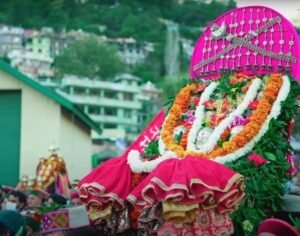
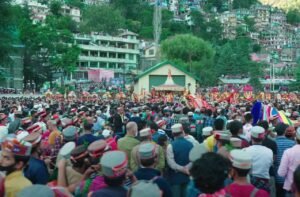
The vibrant festivity of Kullu Dussehra takes place at the sprawling Dhalpur Maidan in Kullu. It’s a captivating sight as the valley’s various gods and goddesses gracefully participate, riding in their splendidly adorned chariots. A captivating highlight of this event involves the chariot carrying Lord Raghunath being pulled and positioned at the center of the grounds until the festival’s conclusion.
A prevailing belief is that those who lend their strength to pulling this divine chariot will receive blessings from Lord Raghunath. This calling entices thousands of devotees, who eagerly gather to partake in this significant act. In the past, the festival of Kullu Dussehra had a tradition involving buffalo sacrifice, though this practice has now been discontinued.
Kullu Dussehra 2025
The upcoming Kullu Dussehra is set to commence on October 2nd and will span over the following seven days. A recent spell of heavy rain has caused significant damage in the Kullu Manali region. Given this circumstance, it remains intriguing to observe the level of enthusiasm among the people for this year’s Kullu Dussehra festival.
PEOPLE ALSO READ : Unveiling the Vibrant Sair Festival – A Thrilling Celebration of Harvest and Heritage
History Behind Kullu Dussehra
This famous festival holds within it a collection of myths, stories, and anecdotes, each tale vividly portraying the festival’s symbolic significance. Two distinct legends are intertwined with the grand celebration of Kullu Dussehra. Let’s delve into the first legend.
Kullu Dussehra and Maharishi Jamdagni
Long ago, Maharishi Jamdagni, on his journey back from Kailash, carried a basket containing images of eighteen different Gods. As he crossed the Chanderkhani pass, a powerful storm swept the images across the expanse of Kullu valley. These images then transformed into the forms of various Gods before the eyes of the hill-dwellers. As a result, the inhabitants began to venerate these scattered divine images with tremendous grandeur and festivity.
This remarkable occurrence bestowed the title “Valley of Gods” upon this splendid land. Locally Kullu is also called “Thaara Kardu ra Desh” meaning Land of Eighteen Deities.
Kullu Dussehra and Raja Jagat Singh
There’s another tale that marks back to the 16th century, contributing to the origin of Kullu Dussehra. It centers around Raja Jagat Singh, who ruled Kullu during that era. Inquisitive about a peasant known for his wisdom, the Raja demanded the pearls of knowledge from him. Faced with this ultimatum, the peasant chose to end his life, jumping into flames while casting a curse upon the Raja “Your rice will appear as worms, and water will appear as blood whenever you eat.”
Haunted by guilt and disgust, the Raja witnessed unsettling visions—rice turning into worms, water transforming into blood. Afflicted and bewildered, the Raja’s health began to deteriorate, eluding diagnosis by healers, preachers, and advisors.
Finally, Raja Jagat Singh sought a solution. A revered Pahadi Baba named Krishan Datt revealed that the cure rested in the blessings of Lord Rama. To break the curse, the Raja was instructed to bring the idol of Lord Raghunath from Ayodhya to Kullu. This endeavor, though arduous, ultimately succeeded, establishing Lord Raghunath as the chief deity of Kullu.
Intriguingly, the weight of the deity varied—increasing while journeying towards Ayodhya and decreasing on the route to Kullu. After settling Lord Raghunath Idol in kullu the King miraculously got healed and he announced celebration of Dashmi on same date every year. This sacred idol, the focal point of the Dussehra festival, is paraded through the hill town on a chariot, captivating all.
PEOPLE ALSO READ : Bangoru Waterfall – The Hidden Waterfall in Bir Billing
How Kullu Dussehra is Celebrated
In other parts of India Dussehra celebrations include burning of effigies of Ravan Kumbhkaran and Meghnath but in Kullu Dussehra no effigy is burnt. To mark this tradition a few bushes are burnt only. When the Dussehra celebrations end in other parts of the country the dussehra celebrations in kullu begin.
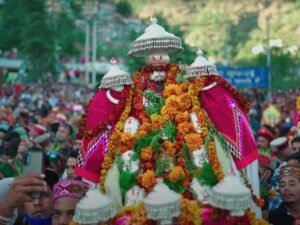
Kullu’s Dussehra celebration unfolds with captivating rituals and festivities. Starting on the tenth day of the Ashwin month, this vibrant event extends over 7days. The king extends a warm invitation to a multitude of gods and goddesses to partake in a yagya held in honor of Raghunath ji in the picturesque Dhalpur village. Over 300 deities grace the occasion, seated within splendidly adorned palanquins.
Rath Procession
Just prior to this grand festival, on Dussehra day itself, the revered goddess Hadimba from Manali makes her way to Kullu. The royal family members eagerly seek her blessings.
The idols of Raghunath ji and Sita and Hidimba are lovingly placed upon the chariot and carried from one location to another. The rath is moved to the center of Dhalpur ground where it will be placed for 7 days. Enveloped by an atmosphere of festivity, this joyful chariot procession captures the essence of the occasion.
The festive spirit continues as the mohalla festival occurs on the sixth day, during which all the gods and goddesses assemble, a collective celebration marked by dancing and singing.
On the seventh day the celebration moves to the banks of the Vyas river, where a momentous event unfolds: Lanka Dahan, the symbolic burning of Lanka. Later on Raghunath ji is peacefully reinstated in the Raghunathpur temple. And thus, Kullu’s renowned Dussehra concludes with a resounding sense of joy and fulfillment.
Dev Milan is major part of Kullu Dussehra celebration
In the Kullu Valley, every village possesses its distinct deity. Kullu Dussehra becomes a remarkable event as deities from all these villages are graciously invited. Each year, an impressive gathering of over 300 deities takes place at Kullu Dussehra.
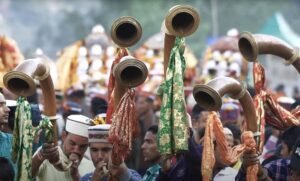
During the entire fair, a unique occurrence unfolds daily – different deities come together for a meeting. Witnessing the palanquins of these Gods and Goddesses converging is truly a mesmerizing experience. This divine assembly, accompanied by the melodious beats of drums, enhances the magnificence of Kullu Dussehra, adding to its splendor.
Cultural Evenings in Kullu Dussehra
Throughout Kullu Dussehra, each day comes alive with vibrant cultural performances. A diverse range of colorful programs, featuring both local talents and artists from outside, graces the festivities. The venue for these captivating events is the Lal Chand Prarthi Kala Kendra.
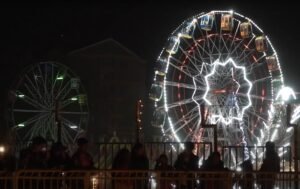
Talented artists from various corners of the nation are welcomed to contribute to the splendor of Kullu Dussehra. As the sun sets, cultural evenings light up with excitement as people eagerly gather to witness and enjoy performances by their beloved artists.
Naati in Kullu Dussehra and a World record
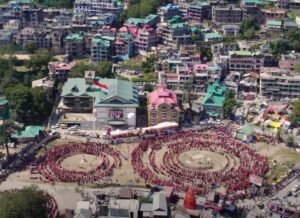
During the year 2015, a remarkable feat unfolded in Kullu Dussehra, where over 9500 dancers, mostly women, came together to perform a naati dance, setting a new Guinness World Record for the largest Nati dance. In 2022, the tradition continued with more than 7500 dancers showcasing the naati dance in their traditional Kulluvi outfits.
In the realm of Kullu’s diverse dances like Ghadai, Panjragi, dohri, Pheti, Basahri, Lahuli, Kortha, Charase-Tarase, Bandhu, Rakhs, and Phagli, the Lalhri dance stands out as exceptionally popular. Not too long ago, devotees of the Devi-Devtas would engage in spirited dancing throughout the night in front of their tents during the Dussehra festivities. Male and female dancers alike would join the Lalhri dance, carrying on until the early hours of the morning. An impressive spectacle was the grand Lalhri held in Raja Kullu’s Chanani (camp), featuring hundreds of participants.
However, in recent decades, the scene has shifted. With the majority of villages now accessible via motorable roads, many people return to their homes in the evening. This shift has impacted the late-night Lalhri dance tradition. Presently, only essential officials of the Devi-Devtas, such as Kardar, Pujari, Gur, Dhami, Dhounsi, remain in the tents alongside the deities. Consequently, the Lalhri dance primarily takes place during the Muhalla night.
Dancing, drinking, feasting and Shopping
The international Kullu Dussehra spans a week, becoming a vibrant period for locals to revel in dancing, drinking, and feasting. A heartwarming tradition among the locals involves inviting guests into their homes during Dashmi, providing them with food, drinks, and accommodation for the nights.
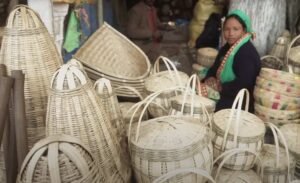
Folks from the distant villages of Kullu Valley journey to Kullu town to partake in the week-long festivities. Here, they engage in a delightful blend of activities – shopping, dining, reuniting with relatives, sharing greetings, dancing, and enjoying drinks. Moreover, the event serves as a fantastic opportunity for people to shop for various home essentials, as Kullu Dussehra presents a convenient platform to acquire a variety of items in one place.
Interesting Points About Kullu Dussehra
Pulling the Rath Yatra is considered to be very fortunate
The effigy of Ravana is not burnt in Kullu Dussehra
Rath Yatra starts only after the flag hoisting of Mata Bhuvaneshwari
Lord Raghunath’s Idol was stolen in year 2014 which was later recovered in Jan 2015
Status of an International festival to the Kullu Dussehra was given in 1972
Significance of Kullu Dussehra
Kullu Dussehra holds immense significance as the cornerstone of Kullu’s fame, drawing attention from across the globe. This grand festival not only shines a spotlight on the town but also fuels the local economy, bringing a surge of business to the region. Beyond commerce, Kullu Dussehra serves as a joyous celebration of the people’s rich culture and tradition, fostering a deep connection to their roots.
Amidst the festivities, Kullu Dussehra becomes a poignant reminder of the town’s glorious history, evoking a sense of pride and nostalgia. Additionally, this occasion provides a precious opportunity for the community to come together, reuniting with their revered deities in a vibrant display of devotion and unity.
How to reach Kullu ?
Kullu town is located on the Right bank of beas River. Kullu is 524 kilometers from Delhi and 224 kilometers from Chandigarh. Bus Service is available from Delhi, Chandigarh and Pathankot. You can also rent a taxi to reach Kullu.
Nearest Airport is Bhuntar airport. Flights are available from delhi to Bhuntar. Nearest railway station is Una Railway station.
Staying options during Kullu Dussehra
Kullu is full of accommodation options. You will find many Hotels from standard to luxury in Kullu town and nearby. However it is recommended that you preebook your Hotels as During Kullu Dussehra the room prices go high and availability remains low.
Other Places to visit during Kullu Dussehra
You can also combine your Kullu Dussehra visit with visits to other nearby places. Kullu valley is full of surprises and beautiful places. You can visit Bijli Mahadev temple, you can also consider visiting Kasol, Manikaran, Manali, Rohtang, Atal tunnel, Naggar, Vashishth, Hidimba Temple etc.
Weather During Kullu Dussehra
During Kullu Dussehra, the weather tends to stay pleasant and ideal for festivities. As October arrives, the lingering summer heat fades away, and the monsoon’s dampness recedes, ensuring a comfortable atmosphere. The winter chill also remains at bay, making October an excellent choice for celebrating Dussehra. Nonetheless, it’s a good idea to bring along some warm clothing, as nights might turn a tad cooler.
PEOPLE ALSO READ : Tatwani – The Hidden Hot Water Spring of Baijnath
FAQ’s
When were Kullu Dussehra Celebrations Started
Kullu Dussehra Clebrations begun in year 1662. The fair was started by King of Kullu Raja Jagat Singh.
Is Kullu Dussehra an International festival
Yes kullu Dussehra has been declared an International festival in the year 1972.
Is Ravana effigy burnt in Kullu Dussehra
No ravana’s effigy is not burnt in Kullu Dussehra.
What is the start date of Kullu Dussehra 2023
The start date of Kullu Dussehra 2025 is 24nd of October.
Royal family of Kullu
Ex minister Maheshwar Singh hails from the royal family of Kullu. Their family begin the Kullu Dussehra celebrations.
